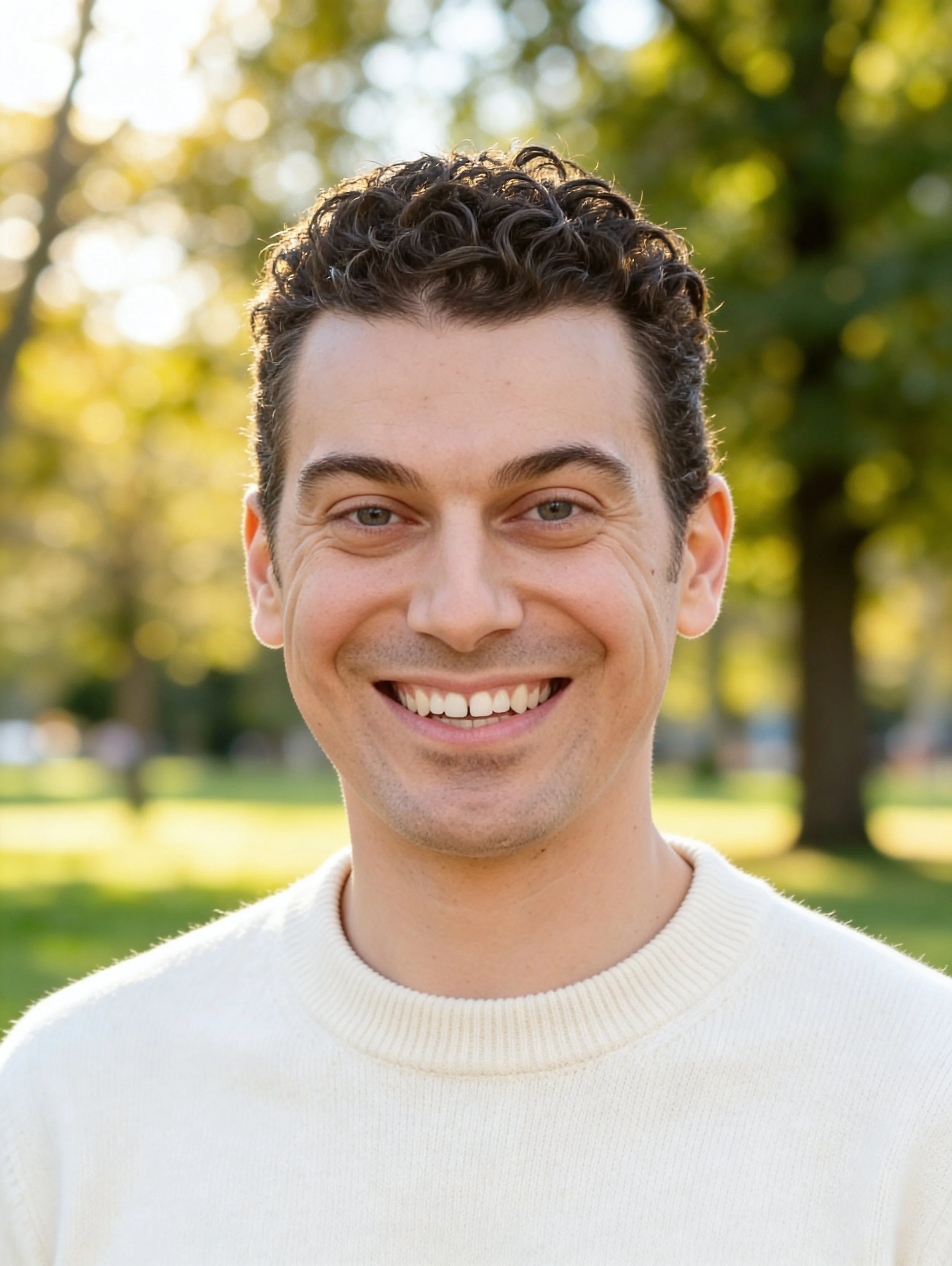
Hi, I’m David Slatkin, LCSW
I believe good therapy should feel thoughtful, collaborative, and genuinely useful.
Clients often describe my approach as warm, direct, practical, and emotionally attuned. My goal is to create a space where you feel safe enough to be honest, respected enough to be yourself, and supported in creating meaningful movement—not simply talking about the same problems without change.
Whether you’re brand new to therapy or returning after a disappointing past experience, I aim to offer something different: therapy that feels both emotionally grounded and practically helpful.
A Thoughtful, Practical Approach to Therapy
Finding the right therapist can feel overwhelming, especially if you’re unsure whether therapy will actually help, have had disappointing experiences in the past, or simply aren’t used to asking for support.
My goal is to offer something different.
Clients often describe my approach as warm, direct, practical, and genuinely supportive. They appreciate having a space where they feel respected, emotionally safe enough to be honest, and supported in creating meaningful change, not simply talking about the same problems without movement.
Good therapy involves both support and challenge: knowing when to listen, when to help you better understand longstanding patterns, and when to help you approach familiar struggles in a different way.
Why I Work This Way
Before becoming a therapist, my background was in science, pre-medical studies, and mental health research, including work at UMass Medical School, the Center for Mindfulness, and men’s mental health research at Clark University.
That experience gave me a strong respect for evidence-based care, but it also made me increasingly aware of the limitations of overly reductionistic or impersonal approaches to human suffering. I became interested not just in symptoms or diagnoses, but in the emotional, relational, and deeply human experiences that often sit beneath them.
That search eventually led me into graduate studies in religious studies, where I explored contemplative traditions, particularly Buddhism, and longstanding questions about suffering, resilience, meaning, and human change.
Today, my work reflects both influences: practical, evidence-based psychotherapy grounded in the understanding that real change rarely comes from one-size-fits-all solutions or symptom management alone. It requires thoughtful, individualized work that helps people better understand themselves, shift longstanding patterns, and move forward in meaningful ways.
What Working Together Looks Like
Effective therapy is not one-size-fits-all.
I work with adults, older teens (15+), young adults, college and graduate students, couples, and individuals navigating anxiety, ADHD, trauma, neurodivergence, identity questions, relationship challenges, performance pressure, burnout, and major life transitions.
Some clients are new to therapy. Others have had disappointing past experiences and are looking for something more grounded, collaborative, and genuinely useful.
I’ve also worked with first responders, veterans, and others in high-stress roles where asking for support may not come naturally. These clients often appreciate a direct, practical, and nonjudgmental approach that respects both resilience and the realities of what they carry.
My work integrates evidence-based psychotherapy, trauma-informed care, and approaches like IFS, CBT, ACT, mindfulness, and solution-focused therapy, not as rigid formulas, but as tools adapted thoughtfully to your needs and goals.
I also offer optional canine-assisted therapy with my therapy dog, Sona, for clients who find animal companionship grounding and supportive.
Education
M.S.W. in Clinical Social Work
Boston College, Newton, MA
M.A. in Religious Studies (Buddhism) University of Virginia, Charlottesville, VA
B.S. in Science & Indian Philosophy
Trinity College, Hartford, CT
Therapeutic Modalities
Internal Family Systems (IFS)
Solution Focused-Therapy (SFT)
Mindfulness
Cognitive Behavioral Therapy (CBT)
Narrative Therapy
Trauma-Informed Care
Existential Psychotherapy
Attachment-based Psychotherapy
Canine-Assisted Psychotherapy
Trainings & Certifications
Internal Family Systems (IFS)—Level 1
IFS Institute
Certified Mindfulness Meditation Teacher
Mindfulness Meditation Teacher Certification Program in collaboration with Sounds True & UCLA’s Greater Good Science Center


How I Work
-
Many people I work with come in unsure whether therapy will actually be helpful, either because they’re new to the process or because past experiences felt passive, overly vague, or simply not like the right fit.
Good therapy should feel collaborative, thoughtful, and relevant to your real life, not like endlessly revisiting the same problems without meaningful movement.
-
Therapy should offer more than simply having a place to talk—though having space to process difficult experiences can be an important part of the work.
My role is to understand what matters most to you and support meaningful progress toward the changes you want, whether that involves deeper self-understanding, navigating challenges more effectively, improving important relationships, or developing practical tools that make daily life feel more manageable.
-
Meaningful therapy requires both emotional safety and thoughtful challenge. Clients often tell me they appreciate having a space where they feel respected, understood, and able to speak openly, while also being supported in approaching familiar patterns in new ways.